


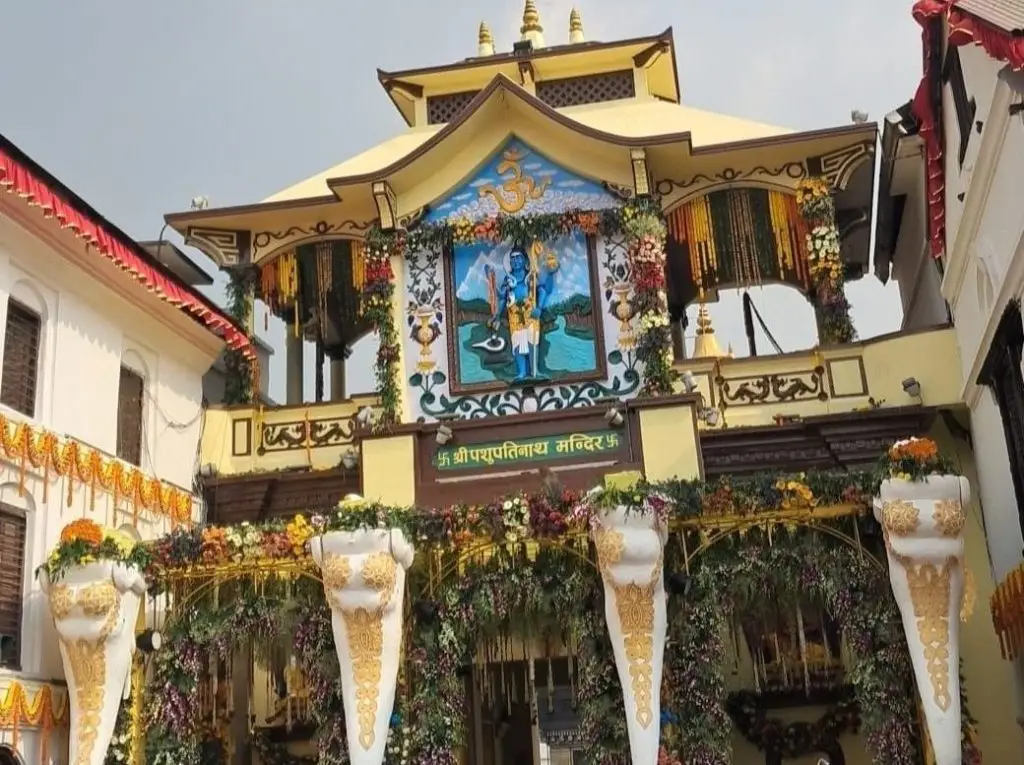
Pashupatinath Temple is more than just a place of worship, it’s the spiritual core of Nepal. A UNESCO World Heritage Site since 1979, this iconic Hindu temple dedicated to Lord Shiva is a breathtaking fusion of history, legend, architecture, and eternal energy. Life, death, and liberation all meet here in chants, in flames, in silence.
They say Lord Shiva once took the form of a deer and roamed the forests of the Kathmandu Valley. When gods found him resting peacefully, they recognized the divinity of the place. From the spot where his horn touched the earth, the Pashupatinath Jyotirlinga emerged — now resting in the main sanctum of the temple. From that divine moment, Pashupatinath became a sacred haven for seekers, saints, and souls.
One of the temple’s most poignant aspects is the Aryaghat, where cremations take place 24/7. Here, the Nepali and Indian Hindu communities cremate their dead beside the Bagmati River, believing that the soul finds moksha (liberation) near Shiva.
This sacred process is public yet deeply spiritual, where grief and peace co-exist, and the flames of cremation carry souls into the afterlife.
The main temple structure is a two-tiered pagoda-style building with a gilded roof, silver-plated doors, and richly carved wooden rafters. The majestic golden Nandi, Shiva’s sacred bull, guards the inner sanctum, his eyes forever fixed on the lingam.
Surrounding the main shrine are over 500 temples, shrines, and ashrams, each echoing centuries of devotion. Intricate carvings, ancient inscriptions, and stone sculptures line the walkways — turning every step into a spiritual experience.
Every February or March, during Maha Shivaratri, over a million devotees from across South Asia gather at Pashupatinath. Sadhus from Varanasi, Rishikesh, and across Nepal camp around the temple in vibrant displays of spirituality.People fast, chant “Om Namah Shivaya,” light butter lamps, and offer bel leaves and milk to Lord Shiva. The atmosphere turns electric — a divine blend of smoke, incense, music, and silence.

The Evening Bagmati Aarti: A Divine Experience
As the sun sets, priests in red and gold robes perform the Bagmati Aarti by the riverbanks. They wave lit oil lamps in rhythmic circles, chant mantras, and ring bells in a magical flow of devotion. Pilgrims and tourists watch, entranced.The river sparkles with flame. The air vibrates with prayer. Pashupatinath comes alive.
To learn more about Nepal’s World Heritage Sites, visit the UNESCO World Heritage Centre.
Designated in 1979, Pashupatinath Temple is not only a religious landmark but also a cultural and architectural treasure. Its preserved craftsmanship, ancient pagoda architecture, and sacred rituals make it a vital symbol of Nepalese identity and heritage.
Pashupatinath is not just a temple. It is a journey, a memory, and a breath of Kathmandu.
Here, the past whispers in carvings, the present glows in lamps, and eternity dances in smoke. Whether you come to pray, reflect, mourn, or simply to witness — Pashupatinath leaves you transformed.
Pashupatinath Temple is open year-round and can be visited during all seasons. Whether you come for spiritual reasons, photography, cultural curiosity, or personal reflection — it offers a once-in-a-lifetime experience.
Contact Great Vision Treks , your trusted travel partner in Nepal to plan your pilgrimage or cultural tour.


2 Comments
Читати
August 31, 2025 at 2:30 amVery interesting read—easy to understand and packed with useful info!
Kedar Mani Khanal
September 21, 2025 at 5:16 amThank you so much for your kind words 🙏 We’re really glad you found our blog interesting and easy to follow. If you’d like more details or guidance about visiting Pashupatinath or other heritage sites in Nepal, we’d be happy to help you.