


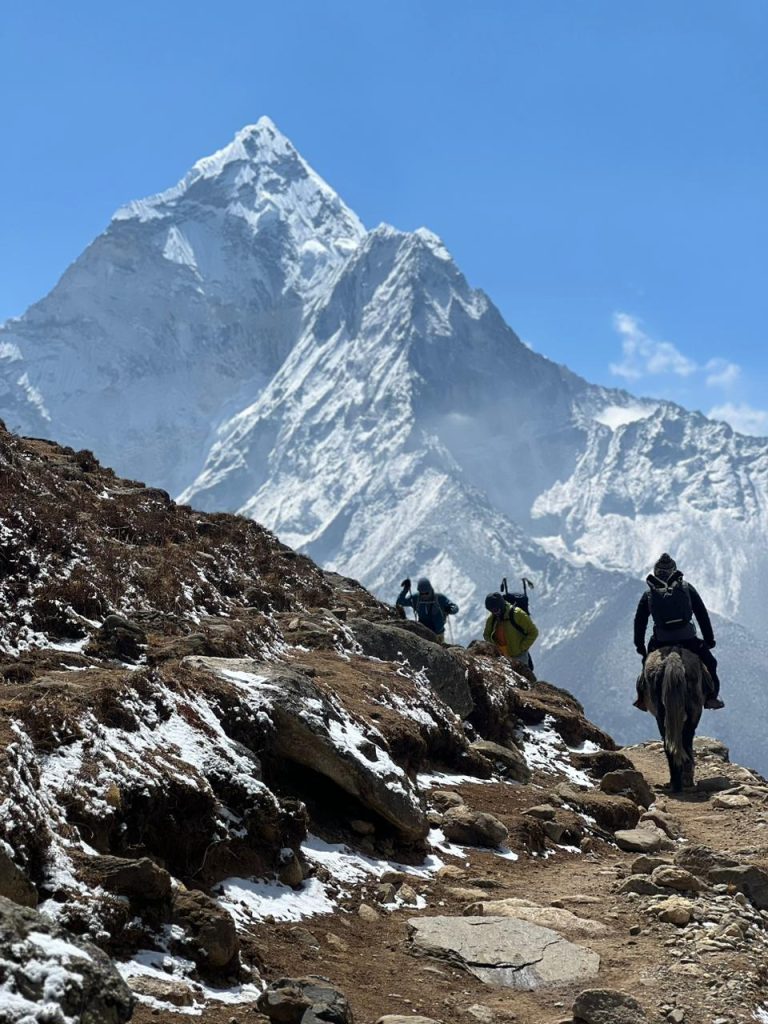
This trek is rated moderate to challenging, ideal for trekkers with a good fitness level. Daily trekking ranges from 5–7 hours across mixed terrain, including forests, suspension bridges, and rocky trails. While there’s no flight involved, the longer trek days and high altitude require endurance and proper preparation.
| Day | Route / Activities | Altitude | Duration |
|---|---|---|---|
| 01 | Arrival in Kathmandu, transfer to hotel | 1,400m | — |
| 02 | Drive from Kathmandu to Salleri | 2,390m | 8–9 hrs |
| 03 | Trek to Nunthala | 2,220m | 6–7 hrs |
| 04 | Trek to Bupsa | 2,360m | 5–6 hrs |
| 05 | Trek to Chaurikharka | 2,650m | 5–6 hrs |
| 06 | Trek to Monjo | 2,840m | 5–6 hrs |
| 07 | Trek to Namche Bazaar | 3,438m | 4–5 hrs |
| 08 | Acclimatization day in Namche | 3,438m | — |
| 09 | Trek to Tengboche | 3,870m | 5–6 hrs |
| 10 | Trek to Dingboche | 4,360m | 5–6 hrs |
| 11 | Acclimatization in Dingboche | 4,360m | — |
| 12 | Trek to Lobuche | 4,940m | 5–6 hrs |
| 13 | Trek to Gorak Shep & Everest Base Camp | 5,170m / 5,364m | 6–7 hrs |
| 14 | Hike to Kala Patthar, trek to Pheriche | 5,545m / 4,288m | 7–8 hrs |
| 15 | Trek back to Lukla | 2,800m | 7–8 hrs |
| 16 | Fly to Kathmandu and transfer to hotel | 1,400m | 35 min flight |
Layered clothing to manage varying temperatures (warm days, cold nights)
Thermal wear for extra warmth
Waterproof jacket to stay dry in rain or snow
Sturdy, comfortable hiking boots
Trekking poles for stability on uneven terrain
Good-quality sleeping bag for cold nights
Sunglasses and sunscreen for sun protection
Hat to shield from the sun and cold
Basic first-aid kit for minor injuries
Medication for altitude sickness and knowledge of symptoms
Travel insurance covering high-altitude trekking and emergency evacuation
Additionally, a lightweight daypack and water purification tablets are also recommended.
Altitude sickness can affect anyone. Therefore, listen to your body and stay aware of symptoms such as headaches, nausea, or dizziness. If anything feels off, inform your guide immediately.
The Khumbu region is home to the Sherpa community, known for its rich Buddhist traditions. Always dress modestly, ask permission before taking photos, and respect religious landmarks, such as mani stones and prayer flags.
Lastly, ensure that your travel insurance covers high-altitude trekking and includes provisions for emergency evacuation. This is especially important in remote Himalayan regions.
Best Time: Spring (March–May) and Autumn (September–November)
Accommodation: Teahouse lodges with basic facilities
Meals: Simple local and international dishes (dal bhat, soup, noodles)
Fitness Level: Moderate to strong fitness is required
Lastly, ensure that your travel insurance covers high-altitude trekking and includes provisions for emergency evacuation. This is especially important in remote Himalayan regions.
The Everest Base Camp trek by road is transforming how adventurers experience the Himalayas. It combines safety, scenic beauty, cultural richness, and adventure into one unforgettable journey.
Whether you’re a first-time visitor to the Himalayas or a returning trekker seeking a deeper connection to the land and people, this route offers something truly special.
Start planning your Everest Base Camp trek by road today and witness the Himalayas in a way that’s immersive, flexible, and unforgettable!
This trek is ideal for adventurous travelers who prefer a scenic overland journey instead of a quick flight. It’s perfect for those seeking a more authentic and less crowded Everest experience with time to acclimatize gradually while exploring remote Sherpa villages and cultural landmarks.
Moderate to strong fitness levels are required, as daily trekking ranges from 5 to 7 hours on mixed terrain, including hills, forests, and rocky paths. Whether you’re a first-time trekker looking for a rewarding challenge or a seasoned adventurer wanting to explore Everest’s classic route by road, this trek promises a meaningful and unforgettable Himalayan adventure.
Skip the flight and take the scenic road to the Himalayas. Book your Everest Base Camp by Road – 16 Days trek now for an unforgettable journey!
The Everest Base Camp by Road – 16 Days trek offers a unique and authentic Himalayan adventure, starting with a scenic drive from Kathmandu to Salleri instead of the usual flight to Lukla. This gradual overland route provides better acclimatization, fewer crowds, and a deeper cultural experience as you pass through remote Sherpa villages, traditional monasteries, and stunning mountain landscapes. Along the way, trekkers enjoy breathtaking views of iconic peaks like Everest, Lhotse, and Ama Dablam. Ideal for travelers seeking a flexible and less hectic way to reach Everest Base Camp, this journey combines adventure, culture, and natural beauty into one unforgettable trek.
Arrive at Tribhuvan International Airport, Kathmandu. Transfer to your hotel and rest. Use the day to prepare for your trek and explore the vibrant capital city.
Start trekking through lush forests and small traditional villages. Pass through farmland and rural settlements as you slowly ascend towards Nunthala. Experience authentic Sherpa village life.
As you approach the higher Solu Khumbu region, the terrain becomes more mountainous. Pass through rhododendron forests and quaint villages on your way to Chaurikharka, a traditional Sherpa settlement.
Trek through forests and meadows to reach Tengboche, home to the famous Tengboche Monastery. Witness stunning views of Everest, Lhotse, and Ama Dablam from the monastery grounds.
Trek past memorials dedicated to climbers and enter a more rugged, rocky landscape. Reach Lobuche, a small settlement near the base of some of the tallest Himalayan peaks.
Begin the descent through the lower Khumbu villages, retracing your steps back to Lukla. Celebrate the completion of the trek in this bustling mountain town.
Catch a morning flight back to Kathmandu. Transfer to your hotel for rest or sightseeing before your onward journey.

📱 WhatsApp / Viber
+977 9851018052
greatvision71@gmail.com




Write Your Review