


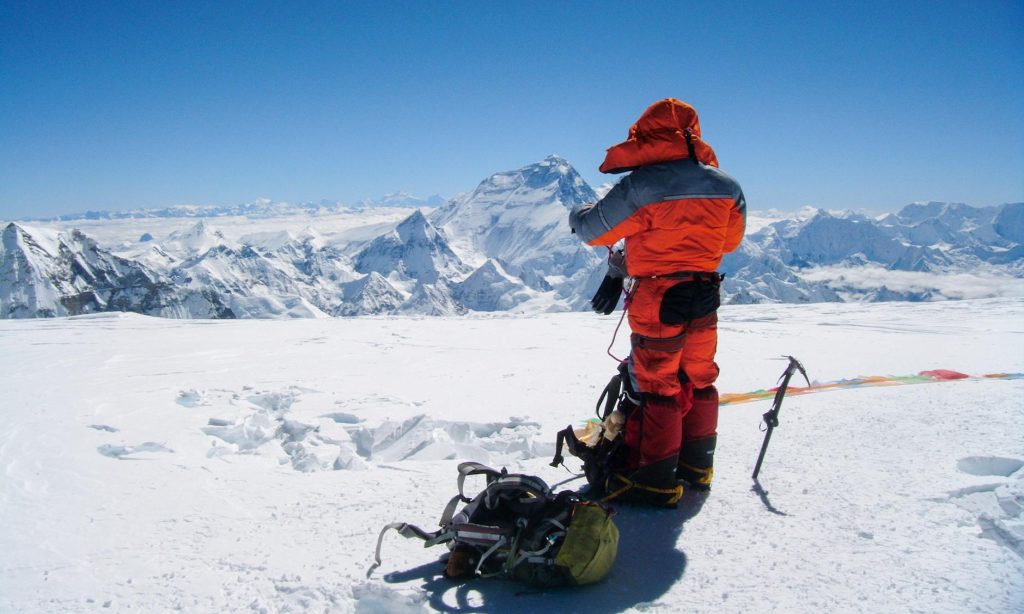
Mount Everest (8,848.86 m / 29,031.7 ft), known as Sagarmatha in Nepali and Chomolungma in Tibetan, is the highest mountain in the world. Located in the Himalayas on the border of Nepal and Tibet, Everest is a symbol of adventure, resilience, and the human spirit. For trekkers and climbers alike, the Everest region (Khumbu Valley) is one of the most sought-after destinations on earth.
History of Mount Everest
- First measured in 1856 by the Great Trigonometrical Survey of India.
- Mount Everest was named after Sir George Everest, Surveyor General of India.
- First successful ascent: Sir Edmund Hillary (New Zealand) and Tenzing Norgay Sherpa (Nepal) on May 29, 1953.
- Since then, thousands of climbers and trekkers visit the Everest region each year.
Everest can be climbed via two main routes: the South Col from Nepal and the Northeast Ridge from Tibet. The mountain is part of the Sagarmatha National Park, a UNESCO World Heritage Site established in 1976, known for its rich biodiversity and Sherpa culture.
Conditions on Everest are extreme, with summit temperatures dropping to –36°C in winter, fierce jet stream winds over 160 km/h, and the perilous ‘death zone’ above 8,000 meters where oxygen levels are dangerously low. To date, more than 300 climbers have lost their lives attempting to reach the summit, though records such as Yuichiro Miura becoming the oldest climber at 80 in 2013, and Jordan Romero the youngest at 13 in 2010, highlight both the risks and triumphs of Everest. Popular treks include the Everest Base Camp Trek, Gokyo Lakes Trek, and the challenging Three Passes Trek, each offering breathtaking Himalayan views and deep cultural immersion.

Permits Required
- Sagarmatha National Park Entry Permit
- Khumbu Pasang Lhamu Rural Municipality Entry Permit
- TIMS Card (Trekkers’ Information Management System)
The best seasons to trek and climb are spring (March–May) and autumn (September–November), with the journey usually starting from Lukla’s Tenzing-Hillary Airport, gateway to the Everest region.
Trekking Packing List
Clothing
- Down jacket (for -15°C or lower)
- Thermal base layers
- Fleece jacket and trekking trousers
- Waterproof shell jacket and pants
- Gloves, a woolen hat, and a buff
- Trekking boots (waterproof, broken-in)
- Camp shoes/sandals
Gear & Essentials
- Sleeping bag (-10°C to -15°C rating)
- Trekking poles
- Backpack (50–65 L) + daypack (20–30 L)
- Headlamp with spare batteries
- Sunglasses & sunscreen SPF 50+
- Water bottles or hydration system + purification tablets
Other Essentials
- Personal first aid kit + AMS medication
- Toiletries (biodegradable soap, wipes, sanitizer)
- Snacks (energy bars, chocolate, nuts)
- Power bank / solar charger
- Trekking permits & passport copies
Best Season to Trek Everest
- Spring (March–May): Warm, clear skies, rhododendrons bloom.
- Autumn (September–November): Best visibility, stable weather, popular season.
- Winter (December–February): Cold, snowy, but fewer trekkers.
Tips for Trekkers
- Acclimatize properly – Spend rest days in Namche and Dingboche.
- Walk slowly and steadily – Prevents altitude sickness.
- Stay hydrated – Drink 3–4 liters daily.
- Hire a guide and porter – For safety and navigation.
- Travel insured – Ensure your insurance covers high-altitude evacuation.
Conclusion
Trekking in the Everest region is a once-in-a-lifetime experience. From the Sherpa culture and sacred monasteries to glaciers, high passes, and iconic Everest Base Camp, it is the ultimate Himalayan adventure. Whether you choose the classic EBC Trek, the challenging Three Passes Trek, or the scenic Gokyo Lakes Trek, Mount Everest offers unmatched beauty and inspiration.


